
PLC × LOCAL AI
Read machine conditions. Identify the next step.
Using equipment data and work records, we show what to check and possible responses when an anomaly occurs. We build a system tailored to your operations, from human approval through maintenance records.
- Build on your existing equipment and PLCs
- People review and approve decisions
- Run AI inside the factory

You can see what is happening. But it is hard to act.
Even when equipment data is available, deciding what to do next can take time. We use information from the worksite to support that decision.
- After an alarm, it takes time to identify the cause and perform initial checks
- Manuals, handover notes, and past responses are stored separately and are hard to find
- Inspection relies on experienced staff and is difficult to hand over to others
Turn equipment data into better decisions
See
Monitor equipment conditions such as operating status, temperature, current, and vibration.
Detect
Detect anomalies and changes, then notify the people responsible.
Support decisions
AI compares readings with work records and presents supporting evidence, unresolved questions, and possible next checks.
AI suggests possible responses but does not stop equipment. A person reviews and approves the response, then records the result for maintenance. The PLC remains responsible for safety control.
Help AI support the machines and PLCs you already have
Use PLC Data
For example, retrieve operating status and alarms from equipment
We organize available data (tags) and communication methods, then connect them to monitoring and AI.
Modify Communications and Programs
For example, add a communication module or gateway to enable a connection
We design the necessary modifications, such as adding data output to the PLC program. We agree with equipment owners or partner companies on who will handle PLC modifications and wiring.
Add Sensors
For example, measure values the PLC cannot capture on its own, such as temperature, current, or vibration
We decide where to measure based on the anomaly you want to check.
Replacing your equipment is not a prerequisite. We review your machines and controls, then plan an approach that may include connections, modifications, or additional sensors.

Make decisions inside the factory. Share only what is needed.
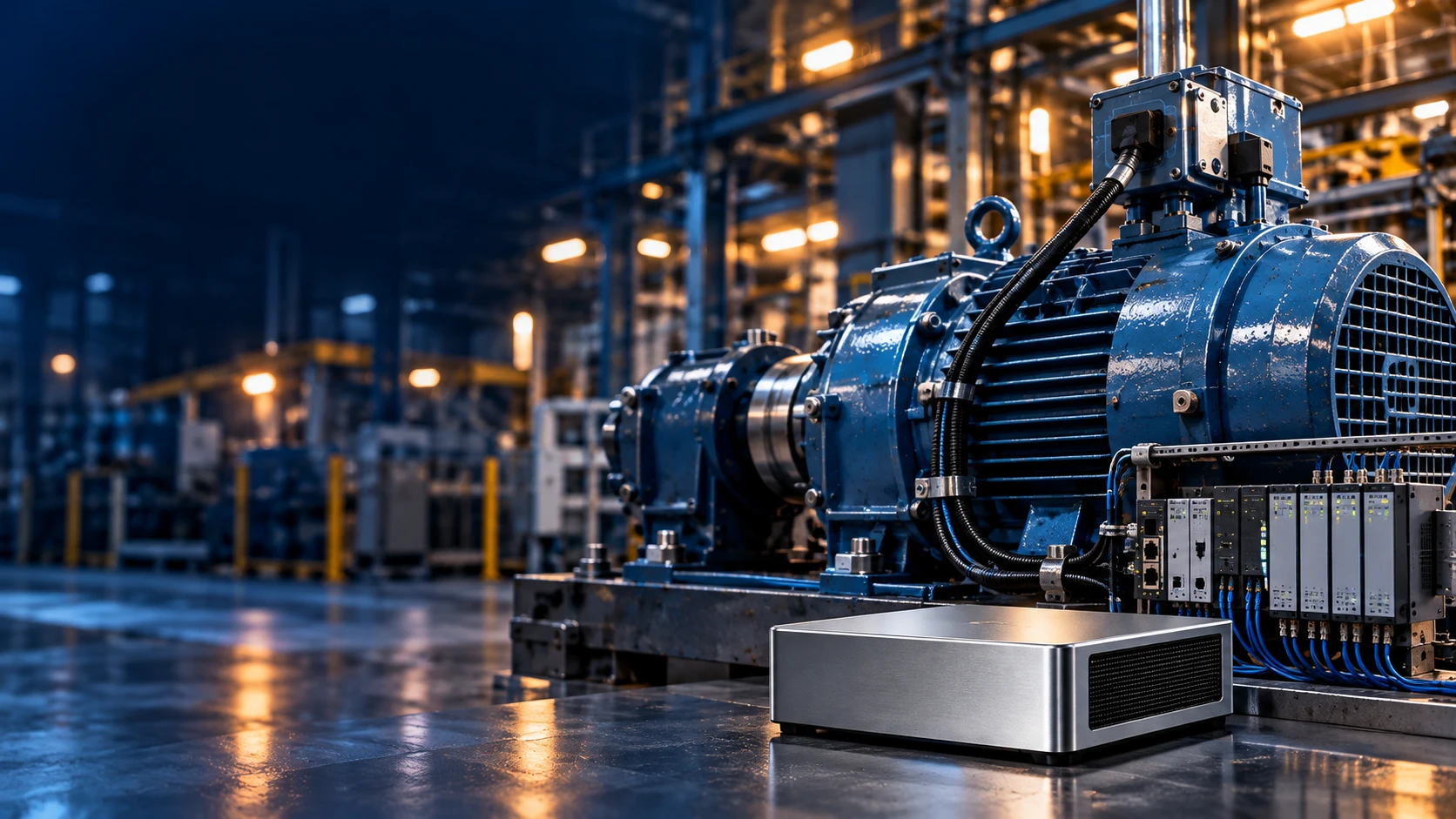
AI inference runs on a PC inside the factory, where teams can use manuals and work records. During design, we agree with you on what information may be sent to the cloud, including information in AI explanations. The system can keep monitoring equipment and making AI assessments inside the factory even if the internet connection is lost. If data from a PLC stops, the system holds the decision instead of relying on outdated values.
We select a PC after reviewing the AI model, workload, response time, and budget.
How we can help
Help staff handle checks after an alarm
Maintenance and production engineering teams may ask us for help when post-alarm checks are concentrated among a few staff members, work records take too long to find, or handovers need improvement.
Add monitoring and maintenance support screens to your equipment
Industrial machinery and equipment manufacturers may consult us about integration that builds on their existing control systems.
How we work
Understand the Site
Clarify equipment, data, and decision-making challenges.
- What we ask you to confirm
- Equipment and PLC models in scope, and situations causing difficulty
- Criteria to move to the next step
- Select the equipment and challenges to validate
Validate
Run a small-scale test of connectivity, AI recommendations, and operations on one machine.
- What we ask you to confirm
- Validation results and usability
- Criteria to move to the next step
- Decide whether to expand to the target equipment
Put It into Ongoing Use
Expand to the target equipment and operate the workflow from approval through work records.
- What we ask you to confirm
- Operating rules and responsible staff
- Criteria to move to the next step
- Start operations on site
Scope of support
What we can support
- PLC and equipment connections: design data (tag) collection, collection intervals, communication methods, and gateways
- Monitoring and anomaly detection: status displays, thresholds, and management of data freshness and gaps
- Local AI: search documents and present response options, supporting evidence, and unresolved questions
- Business interface: manage approvals, assignments, maintenance work, and history
What we do not guarantee
- We do not guarantee connections to every PLC model or communication method. We check compatibility by model.
- We do not guarantee that modifications can be made without stopping equipment.
- We do not guarantee the accuracy of failure timing predictions or autonomous control performance.
- The decision examples and screens shown are illustrative; they are not evidence of prior deployments or measured performance.
Proof of concept and pricing
What a small-scale PoC validates
We test connectivity, AI recommendations, conditions for deferring a decision, response times, and ease of operation within the agreed scope. Deliverables are decided at contract time.
How costs are determined
We do not set standard prices or timelines. We review the number of machines, PLC models, available documentation, screen scope, and whether on-site work is needed, then estimate the PoC and full implementation separately.
Equipment and modification costs
Equipment purchases, PLC modifications, and cloud operations and maintenance are listed separately from development costs in the estimate.
We provide a custom estimate based on the equipment and integration scope. For a consultation, please tell us the equipment and PLC models, the situation causing difficulty, available data, and your desired timeline. You can still consult us if you do not know all the details.
Learn more and view materials
The Kikainomikata overview and materials bring together interface examples, possible use cases, and architecture details.
Frequently asked questions
Can we implement this without replacing our existing PLC?
We review the PLC model, communication method, and available data (tags) to determine how to connect it. We can consider using your existing PLC, but cannot guarantee compatibility with every model. If communication features or a gateway need to be added, we clarify the impact and cost in advance.
Can the AI stop equipment on its own?
No. We design AI recommendations, human approval, and safety controls as separate functions; AI output is not sent directly as an equipment control command. If the system is connected to actual equipment operations, we separately confirm execution conditions, permissions, and responsibilities with the PLC owner.
What stops working if the internet connection is lost?
When monitoring and processing run inside the factory, monitoring and AI decision support can continue. Cloud interface updates and approvals through the cloud will be limited. If data from a PLC stops, the system defers decisions rather than relying on stale values.
Is factory data sent outside the site?
With local inference, AI processing runs on a PC inside the factory. If a cloud interface is also used, only agreed information—such as equipment status, anomaly events, and decision results—is sent. We decide what is sent and where it is stored during design.
What should I prepare before a consultation?
Please tell us about the equipment and PLC models, communication methods, available data, decisions that are challenging, and the format of manuals or handover notes. You do not need to send confidential documents for the initial consultation.
What do you test in a PoC, and what do you deliver?
We test connectivity, AI recommendations, conditions for deferring a decision, response times, and ease of operation. Potential deliverables include connection specifications, prototype screens, evaluation results, constraints, and considerations for full implementation; we agree on them at the time of contracting.
How much will it cost, and how long will it take?
We do not set standard prices or timelines. They depend on the number of machines, compatibility with existing PLCs, the available documentation, the scope of AI evaluation and screens, and whether on-site work is needed. After reviewing the current situation, we estimate the PoC and full implementation separately.
Do I need a specific PC for AI?
The overview page shows one example configuration using DGX Spark. We select equipment based on the AI models, workload, number of concurrent users, response time, and budget required.
Still figuring out what to build?
Whether you want to reduce manual work or bring a service idea to life, we’ll help clarify your goals and explore a practical path forward.